
These Profitable Home Businesses Were Launched in the Pandemic
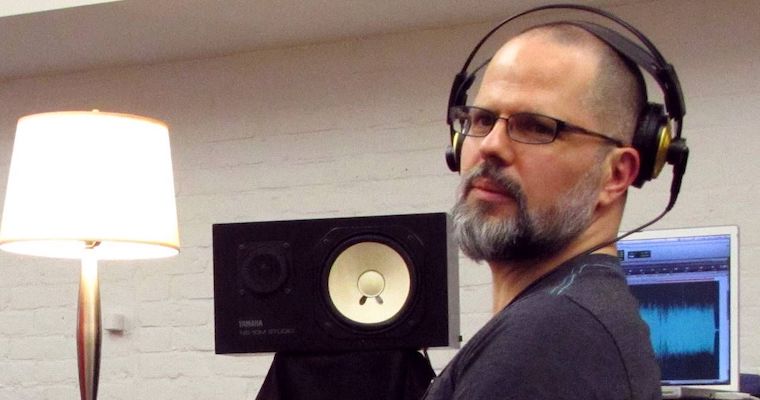
Podcast producer Glen Munoz
This article is part of America's Entrepreneurs, a Next Avenue initiative made possible by the Richard M. Schulze Family Foundation and Entrepreneur and Innovation Exchange.
Almost every day since the outbreak of the coronavirus, we've heard stories about businesses shutting down. Yet new businesses have also been launched during the pandemic at the fastest rate in over a decade, according to The Wall Street Journal.
Some of these new businesses and side gigs are being launched by Americans over 50 from home.
Here are stories of two such entrepreneurs who are using clever marketing tactics, networks of friends, family and business connections and good old-fashioned ingenuity. They might inspire you to start your own home-based business.
Glen Munoz: From Recording Studio to Podcasting
For the last 10 years, Glen Muñoz, 52, of New York City, had been operating a recording studio out of leased space in lower Manhattan. Then, COVID-19 brought his business — providing audio services for TV shows and other clients — to a screeching halt.
Muñoz knew that one of his biggest challenges would be competing with low-priced competitors.
In early April 2020, Muñoz came up with an idea that would let him use his 30+ years of experience in digital marketing and audio services: he'd create a full-service podcast production and distribution company, Pod Pro Audio, which he could run from the safety of his home.
"I had enjoyed listening to podcasts for years," Muñoz says. "I knew they were continuing to grow in popularity, and I thought it would be fun to make them."
He filled in podcast knowledge gaps with research from Google and the New York Public Library, which began offering video chats with research librarians during the pandemic.
"There was very little expense involved in setting up what I needed for podcast production," says Muñoz. He used his existing desk and bought software for his home computer ($149), a webcam ($79), a basic USB microphone ($49) and a quality set of headphones ($249). Total cost: just over $500.
Muñoz knew that one of his biggest challenges would be competing with low-priced competitors. "I offer a premium service," he says, "but the Internet allows for anyone to be a 'podcast producer' from anywhere. That means that a kid in his bedroom in Billings, Montana can afford to do it for next to nothing."
In early discussions with others about his business, Muñoz found that many potential clients were unfamiliar with podcasting and nervous about the gear and technology involved. So, he developed a handful of brief "How-To" manuals that helped them understand how to be a successful podcaster, which also showcased the value-added services he provided.
His first client was someone he knew from college who wanted to launch a podcast to support a new consulting business. Muñoz produced that podcast in April. Within the first few months of launching the business, Muñoz was turning a profit.
After three decades working, Muñoz has built up a large network; reaching out to them is the main way he gets clients.
"If my contacts aren't interested in podcast production services, I ask them to refer me to two or three people who might be able to use my services or provide any other guidance," he says. They often do.
Muñoz offers this tip to aspiring entrepreneurs: "Stay nimble and be receptive to what the market demands. In my case, my initial goal was to create original content podcasts similar to serialized fiction stories like the old-school radio-drama productions. But the demand for my skills and service lay in working with professionals and brands looking to create 'branded content.'"
Lesa Forrest: Launching a Life Coach Business
Lesa Forrest, 55, of Las Vegas, was furloughed from her customer service position at a restaurant supply company in March 2020. When she wasn't called back after a month, she made a decision.
"I had originally planned to retire in 2025 and do something I was passionate about and still earn income," Forrest says. "When the pandemic happened, I realized: 'I'm home, and I have all this time. I might as well launch the business now!'" The business: First Step Family, offering life coaching services.
Using her $1,200 stimulus check and some savings, Forrest spent a total of $2,000 for online classes on setting up a website and social media marketing as well as for a logo and legal work to start the company. (She had already received life coach training and certification in 2019.)
Complimentary sessions let potential clients better understand how Forrest can help them.
Her biggest challenge: getting clients. Forrest got her first two through friends of friends. To find how to attract others, she watched YouTube videos, studied family life coaches online and hired her own coach.
Here are some of her key learnings for others considering launching an advice business:
Focus on a niche. Forrest drew on her background as a mom in a blended family of six to focus on assisting biological and stepmoms in blended families.
Offer a free 30-minute consultation. "I've never had anyone on the phone who hasn't become a client," Forrest says. The complimentary sessions let potential clients better understand how Forrest can help them.
Use social media. "I created two free Facebook groups to build a community," Forrest says. In the first group, Moms Helping Moms Las Vegas, she tested out a free group-coaching program. "It helped me build credibility,and also allowed me to make tweaks to the paid group-coaching program I'm rolling out shortly," says Forrest.
Consider buying leads. "I found my coach through Bark [an online marketplace to search for professionals] and signed up to get leads from other people looking for coaches. I've gotten several clients that way," says Forrest.
She has already recouped her initial investment and, thanks in part to low overhead, Forrest's coaching business is profitable.
Today, she offers individual and group coaching sessions nationally, through phone, Zoom or Skype calls. "Even if I get called back to my job, I'll still coach nights and weekends," she says. "This is something I will definitely do until I retire and beyond."

View Profile