
The Cowboy Advantage: What Rural Culture Teaches Entrepreneurs
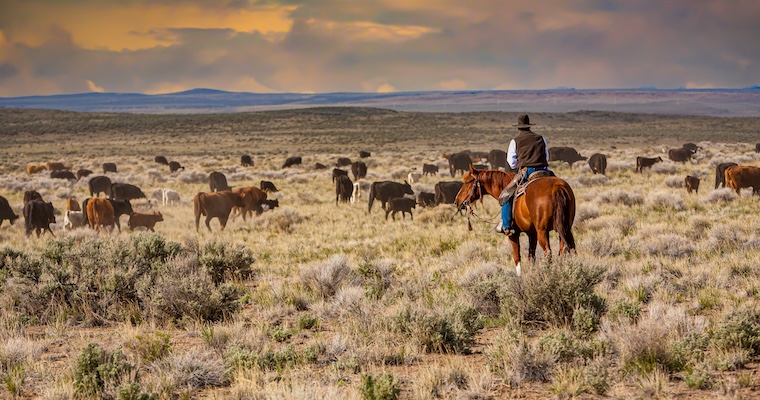
Stephenville, Texas, shows how tight relationships, resource constraints, deep customer knowledge, and a culture of self-reliance can create entrepreneurial strengths that urban founders should study.
Entrepreneurship researchers often assume innovation flows outward from cities into rural America. The self-proclaimed Cowboy Capital of the World (Stephenville, Texas) challenges that assumption. That title is not just marketing. Stephenville has a genuine, long-lived identity built around ranching, rodeo, and the working cowboy life. Professional and retired rodeo competitors live here in unusually high numbers. The culture is unapologetically rural, rooted in values that go back generations: hard work, self-reliance, personal accountability, and a deep belief that if something needs doing, you figure out how to do it yourself.
Those are not just cultural traits. As we will argue, they are entrepreneurial traits, and they are woven into the fabric of this community in ways that outsiders often underestimate.
Stephenville has roughly 22,000 people, a medium-sized university with a storied national championship rodeo team, and a history rooted in agriculture and ranching. It is also a place where the nearest major airport is nearly two hours away, where recruiting a specialized hire means convincing someone to move, and where the entrepreneurial support network looks very different than it does in Austin or Dallas. In other words, Stephenville is not Silicon Prairie. And that is precisely what makes it interesting.
This essay is written first for the people who study, teach, and fund entrepreneurship: researchers, educators, and the economic development leaders who decide where public and private dollars go. Practicing founders, and rural ones in particular, should find something useful here as well, but our main aim is to correct an assumption that quietly shapes how that larger group thinks and acts. The assumption is that entrepreneurial capability starts in cities and flows outward, and that rural places are defined mostly by what they lack. That framing carries a cost. It pushes support organizations to import urban models wholesale, to treat rural founders as a population to be fixed rather than one to learn from, and to overlook strengths that are already present and already working. Stephenville is a useful place to see why the assumption is incomplete.
Cowboy Culture is Entrepreneurial by Nature
Consider the cowboy ethic. Working cowboys (not the cheap imitation caricatures or romanticized versions) who make their living on ranches, in rodeo arenas, and in the agricultural supply chains that run through communities like Stephenville are essentially independent operators running complex physical and logistical operations under conditions of genuine uncertainty. They fix what breaks with what is on hand. They make high-stakes decisions quickly, often alone, and live with the outcomes. They do not wait for someone else to identify the problem, assign responsibility, or develop a solution. That is not a personality quirk. It is a professional orientation that has been developed, tested, and refined over generations of working in environments that do not forgive passivity.
A clarification is in order before we go further. We are not arguing that rural places, as a category, produce better entrepreneurs. Further, rural communities are not interchangeable. Some have been hollowed out by decades of lost industry and out-migration, and the cultural confidence we describe here can erode as surely as it can be built. What we are pointing to is narrower and more specific: a particular cultural inheritance, the working-cowboy ethic, that happens to be unusually concentrated in and around Stephenville. Erath County has long ranked among the top milk-producing counties in Texas; the surrounding equine and rodeo economy keeps expanding; and the agricultural supply chain that depends on both runs straight through town. The point is not that the place is rural. The point is what the place has spent generations teaching its people to do.
That orientation toward self-reliance, toward action under uncertainty, and toward personal ownership of outcomes is exactly what entrepreneurship requires. Business schools invest heavily in trying to develop it. Accelerator programs build elaborate curricula around it. And in Stephenville, it is already present in the cultural inheritance of the community, transmitted not through coursework but through observation, expectation, and example across generations.
This matters in two distinct ways. First, it means that many founders raised in this culture arrive at their ventures with a readiness for the hard parts of business ownership already in place. This means the willingness to act without complete information, to absorb setbacks without catastrophizing, and to keep working when the outcome is uncertain. The claim is not that founders from large metro startup hubs (what we are loosely calling urban entrepreneurs) are somehow less capable. Many are extraordinary. The difference is where the readiness comes from. In a big-city startup environment, that disposition is usually built on purpose, through mentorship, accelerators, and hard early failures. In a community shaped by the cowboy ethic, it tends to arrive earlier and with less effort, absorbed through upbringing rather than acquired through training. These are not exotic capabilities here. They are baseline expectations.
Second, it means that rural entrepreneurs operate in a community that understands and respects what they are doing. Entrepreneurship is not a foreign concept in Stephenville. Starting something, building something, running something of your own…all fit naturally within a cultural framework that has always valued independence and self-determination. That ambient social support is not trivial. Entrepreneurship is hard, and the psychological weight of building a business is real. Operating in a community that genuinely respects the attempt, that does not require extensive explanation of why you would take that kind of risk, matters more than most entrepreneurship researchers have acknowledged.
Cultural capital also manifests in something more specific: a practical, no-nonsense problem-solving orientation that is visible across many rural business communities. There is very little tolerance for overthinking in cowboy culture. You assess the situation, you make a call, and you get to work. That bias toward action, combined with the resourcefulness that comes from working in environments where you cannot always wait for the right tool or the right conditions, produces entrepreneurs who are often remarkably good at finding workable solutions to messy, real-world problems. Not elegant solutions, necessarily. Workable ones, by necessity. And in the early stages of a business, a workable solution implemented today is almost always worth more than an elegant solution implemented next quarter.
Lessons Travel Both Ways
Here is the part that does not get said often enough: Urban entrepreneurs and policymakers have things to learn from rural entrepreneurship, not just the reverse. The default assumption in most entrepreneurship research and policy circles is that knowledge, best practices, and institutional support flow outward from urban centers to rural communities. That assumption deserves a harder look.
The relationship capital and cultural capital that rural communities carry (the trust networks, the embedded accountability, the self-reliant problem-solving orientation) are things that urban businesses and startup communities often try to manufacture through formal programs and carefully designed incentive structures. They are trying to build deliberately what rural communities have developed organically over generations. That is worth acknowledging, and worth studying.
The deep customer knowledge that comes from operating in a small, intimate market is something that many large companies spend enormous sums on focus groups and data analytics trying to approximate. The lean, adaptable operation that rural necessity produces is something that startup methodologists have spent decades trying to teach founders who arrived with too much capital too early and never developed the discipline that scarcity builds. The self-reliant, figure-it-out orientation that characterizes the best rural entrepreneur is something that gets celebrated in startup culture under different labels. That cowboy pragmatism that treats obstacles as problems to be solved rather than reasons to stop is the foundation on which entrepreneurial persistence is built. In places like Stephenville, it is just how people were raised.
The adaptive competence that rural entrepreneurs develop through years of constraint-driven problem solving is precisely what urban startup culture tries to manufacture through lean methodology, design thinking workshops, and minimum viable product frameworks. The difference is that for rural entrepreneurs, these are not methodologies. They are habits of mind built through necessity and reinforced by cultural expectation. That is a meaningful distinction, and it deserves more respect than it typically receives.
None of this argues that rural entrepreneurship is simply better. It is not always better; it is harder in many ways, and the disadvantages are real and should not be minimized. Access to capital is tighter; talent pools are smaller; and the distance from major markets creates friction that no amount of grit can fully eliminate. But it is not simply a lesser version of urban entrepreneurship either. It is a different environment that produces different adaptations, and some of those adaptations are genuinely worth our attention.
Concluding Thoughts
The entrepreneurial tendencies that naturally grow out of cowboy culture do not exist in isolation. They reinforce each other in ways that are difficult to replicate artificially. The trust networks of a rural community make cultural transmission more reliable. The cultural inheritance of self-reliance makes adaptive responses more instinctive. And the adaptive competence built through years of constraint deepens the community relationships that sustain a rural business through hard times. Together, they form a form of entrepreneurial infrastructure that is invisible on a balance sheet but very visible in the longevity and community impact of the businesses that carry it.
What this also means is that policymakers and researchers interested in rural economic development would do well to start from what is already there. The instinct is often to transplant urban models, to replicate incubators and co-working spaces and pitch competitions, as though the missing ingredient is institutional scaffolding. Sometimes it is. But more often, the cultural and relational foundations are already strong. The better question is how to build on them rather than around them.
In practice, that points to a few concrete moves. Before funding another incubator, an economic development office can take inventory of the relational and cultural assets a place already has, then ask which ones a new program would duplicate rather than add. A university that sits inside a community like this one (Tarleton State University, a founding member of the Texas A&M University System, sits in the middle of Stephenville) can treat local founders as teaching cases and bring working ranchers, dairy operators, and agricultural suppliers into the classroom, rather than leaning only on case studies from places its students will never set foot in. Educators who want to build an entrepreneurial mindset can start by naming the one their students already carry. And rural founders can stop apologizing for not being in Austin, and start treating their customer intimacy, their trust networks, and their bias toward action as the competitive advantages they are.
There is an old saying in cowboy culture: you ride the horse you have, not the horse you wish you had. Rural entrepreneurs understand this intuitively. You work with the market in front of you, the relationships you have built, the cultural strengths your community has developed over generations, and the resources you can actually access. You do not wait for perfect conditions. You get to work.

View Profile

View Profile