How Rural Communities Can Keep Businesses Alive Across Generations
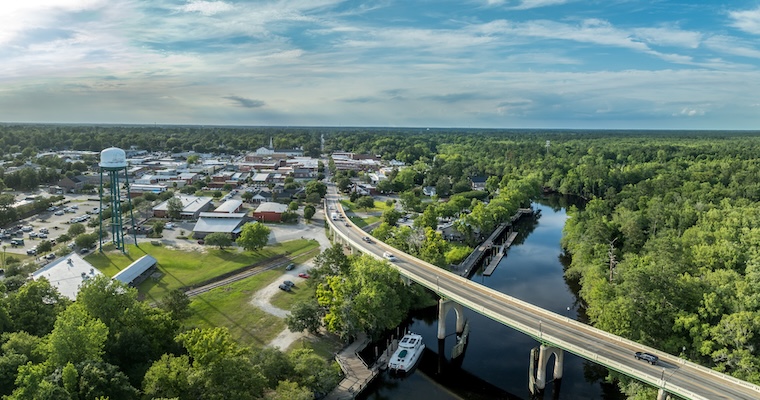
Rural communities risk losing more than businesses when owners retire. Learn how transferring knowledge, relationships, and judgment can strengthen local economies.
The rancher in this story is a composite, but versions of his situation play out across rural Texas every year. He turns 74 after more than 40 years running cows on 600 acres his father bought. His daughter is an accountant in Dallas, and his son sells medical equipment out of Fort Worth. Both love the place. Neither is coming back to run it, though nobody in the family has said so out loud. A hard winter and a cardiology appointment finally force the question. The best offer comes from a developer who can pay more than any rancher in the county, and two years later the pasture that flooded every wet March is a subdivision of five-acre lots.
The land was the visible loss. A larger one left with the retired rancher. He knew which pastures would hold cattle through a dry August, when to sell calves in a bad year, which neighbors would show up for branding, and who to call when the well pump quit at two in the morning (and what to say so the man actually came). None of it was written down or handed to anyone.
Multiply that story across a county – and across the entire country -- and the shape of the problem comes into view. Drive any farm-to-market road out of Stephenville and you will pass a dairy, a feed store, or a café where the owner is well past 65 and nobody has had the conversation about what happens next. You will also pass new subdivisions on what was working pasture five years ago, because land near the Metroplex sells for more as house lots than it ever will for grazing.
Rural Texas is the setting here because the problem is unfolding there in real time, but the logic applies well beyond it -- from Midwestern farm towns to New England harbors to Appalachia and the Ozarks to the Palouse region of southeastern Washington.
Knowledge: Lost in Transition
Rural communities tend to experience all of this as separate problems: young people leaving, farms and businesses without successors, and the steady erosion of the skills that made the place work. Each usually gets its own program, often run by a different organization on a different grant cycle. This article argues they are one problem. Outmigration, succession failure, business closure, and the conversion of working land are symptoms of one underlying failure, which comes down to practical knowledge not passing from one generation to the next. The remedy has a name worth using. Knowledge continuity is the successful transfer of practical know-how, judgment, relationships, and community leadership from those who hold them to those who will need them.
The stakes are higher than they first appear, because communities can replace buildings far more easily than they can replace accumulated judgment. A town can fill an empty storefront and still fail to pass on the know-how and relationships that keep local institutions working. When that happens, each replacement starts with less to stand on than the last.
The good news is that the problem has workable answers. Communities that keep their working knowledge tend to open succession conversations a decade or more before an owner wants out. They make the path to ownership visible to young people who want to stay, to adults who come home, and to long-time employees who already know the work. Money goes into an overlap period, so the old owner can keep teaching while the new one takes charge. Civic roles get handed down as deliberately as businesses. None of these habits takes root, though, until a community decides that succession is everyone's business and not only a private family matter, so the article closes with how that shared expectation gets built.
Multiple Problems That Are Really One
Young people leave, and returners find no way in
Rural counties lose 18-to-25-year-olds to cities, in Texas and everywhere else. That part of the story is old and partly unavoidable, since young people leave for education and early careers. Less often noticed is the return flow. Ben Winchester (2012) at the University of Minnesota Extension has spent years documenting a rural "brain gain." People in their 30s and 40s, many of them raised in small towns, are moving to rural counties with education, earning power, and children in tow. The loss of the 22-year-old is real. So is the arrival of the 38-year-old, and most rural communities have built nothing to receive them.
Owners retire without successors
Texas has more farms than any other state, about 230,000 at the 2022 Census of Agriculture, and it lost nearly 18,000 of them in the five years before that count. The average Texas producer is now almost 60 (USDA NASS, 2024). In a 2022 Texas A&M AgriLife Extension survey, only about half of responding producers and landowners had a succession plan. Most had named an heir, but roughly two-thirds of those heirs were not involved in day-to-day management (Lashmet & Benavidez, 2022). An heir named in a will is a long way from a successor who can run the place. Those heirs are on track to inherit what Lee and Collins (2027) call experiential debt, a shortfall in judgment that builds up when people take on responsibility without first living through the decisions that would have prepared them for it. The debt stays hidden as long as the founder is around to make the hard calls. It comes due the first season the successor has to make them alone.
When no prepared successor exists, some land leaves agriculture altogether. Between 2017 and 2022, roughly 1.8 million acres of Texas working land were converted to other uses, a shift the Texas A&M Natural Resources Institute (2025) ties to rising land values and population growth. A common outcome falls in between. The daughter in Dallas keeps the ranch and leases it to a neighbor. Nationally, 79 percent of rented farmland belongs to landlords who do not farm it, and the average principal landlord is 69 (USDA NASS, 2026). The land stays in production, but the judgment that went with it has nowhere to live; the owner no longer knows the place day to day, and a tenant on a short lease has little reason to learn it the way the old rancher did.
Know-how leaves with them
The third problem is the quietest, because nothing visible happens when it occurs. The graduate who leaves at 22 takes with them the chance to learn the place's know-how from the people who hold it. Forty years later, an owner exits without a successor, and decades of judgment go out the door. The loss can stay hidden for years while storefronts remain open and calves still go to market. Then several owners retire within a few years of each other, and what looked like separate personal decisions becomes a community-wide loss of operating memory.
These problems share one missing step: a knowledge handoff that never happened. Figure 1 traces how the chain usually runs.

Texas added about 391,000 residents between mid-2024 and mid-2025, roughly 1,100 a day (U.S. Census Bureau, 2026), and much of that growth spills into former ranchland. In counties such as Erath, Comanche, and Hamilton, a developer's offer can exceed anything a working operation could repay. Knowledge continuity is necessary there but not sufficient, and it has to be paired with tools that change the price of land, such as conservation easements and agricultural valuation. Still, price pressure explains why a sale is tempting better than it explains why nobody is ready to keep the operation going. Where nobody is prepared, the developer's offer is the only offer on the table.
What Is Lost When No One Takes Over
What the Business Loses
The most concrete loss is operational, and much of it is what researchers call tacit knowledge. In plain terms, tacit knowledge is the know-how people use every day without being able to fully explain it, such as the feel for when something is off. The rancher's sense of which pasture will hold cattle through August is a textbook case. So is a feed store owner's read on which customers will pay in 30 days and which ones need a phone call. The philosopher Michael Polanyi (1966) named this kind of knowledge and summed it up in a line still widely quoted: "we can know more than we can tell" (p. 4). A buyer learns it only by living the daily work, usually at some cost.
Relationships are even harder to see. Every rural business sits inside a mental map of who trusts whom and who will not do business with whom, and the owner keeps that map in memory. A successor who does not receive it spends years redrawing it, often by making mistakes the old owner could have headed off with a single conversation.
Judgment is the slowest of these to rebuild, and it is where experiential debt does its damage. Lee and Collins (forthcoming, Journal of Small Business Strategy, 2027) developed the idea to explain what happens when founders let AI tools handle work that would otherwise build their judgment, but the mechanism applies just as well to succession. Judgment grows out of friction, meaning years of consequential calls made, lived with, and corrected. Every shortcut around that friction adds to a deficit that appears on no balance sheet. A successor can run on it quietly for years, until a drought or the loss of a key customer forces a decision the old owner would have seen coming. No checklist pays it down. Only time spent making real decisions, with someone experienced close enough to explain what went wrong, reduces it.
What the Community Loses
There is another kind of loss that almost nobody accounts for. The retiring rancher also runs the county fair board, and the hardware store owner sits on the water district. The dairy operator has chaired the volunteer fire department's fundraiser for twenty years, and nobody else knows which business donates the brisket or which county official has to be called three times before anything happens. That civic leadership retires right along with the operating knowledge.
Two quieter losses come with it. One is institutional memory, such as why the co-op rewrote its bylaws or what happened the last time the school district tried to consolidate. The other is informal coordination, the unofficial machinery that gets sandbags filled before a flood or a benefit supper organized in four days. A community's ability to organize its own life rests largely with the people who also hold its business knowledge, and it tends to leave when they do.
Communities can run up experiential debt of their own. When the volunteer who ran the county fair for 20 years steps down and someone who never shadowed her takes over, the first year usually goes fine on momentum. The shortfall shows when something breaks, such as a sponsor pulling out, the arena flooding, or a new county commissioner who does things differently. Let that happen across the fair board, the fire department, and the water district at once, and a town finds it can no longer do things it once did without effort.
Why the Standard Remedies Underperform
Every rural region has programs aimed at pieces of this problem. Most are worthwhile, and most underperform because they misdiagnose it.
Many owners never get as far as a plan. In a late-2024 Gallup survey of U.S. small-business owners, 22 percent planned to close the business when they stepped away, and a third were unsure or had no long-term plan (Rothwell, 2025). When planning does happen, it is usually a legal and financial event: an owner reaches seventy, sees an estate attorney, and leaves with a trust and a valuation. Those documents settle who gets the assets. None of them transfers an ounce of tacit knowledge, and by 70 the window for an unhurried apprenticeship has usually closed. A plan that transfers the title and skips the apprenticeship hands the successor clear ownership and a large experiential debt in one transaction.
Youth retention is often handled as a persuasion problem, as though the obstacle were affection. Sociologists Patrick Carr and Maria Kefalas (2009) documented a related irony in a small Iowa town, where adults invested heavily in the high achievers most likely to leave and largely neglected the young people who intended to stay. A later national study of nearly 9,000 rural high school students found little evidence that schools push students out. What shaped their plans most was how they read the local economy, and the highest achievers, though the most likely to leave, were also among the most attached to home (Petrin et al., 2014). Young people leave when they cannot see a credible path to owning something worth owning.
Newcomer recruitment, meanwhile, is usually framed as an infrastructure project built on broadband, tax abatements, and cheap land. What recruiters rarely offer is a business to buy or a way into the community's working relationships, so recruits often leave within a few years. Recruitment without a succession pipeline amounts to recruitment into a vacuum.
Separate institutions also handle separate pieces. The extension office may know which owners are nearing retirement, the school which young adults want to stay, and the chamber which former residents are thinking about coming home. If nobody connects those people, a community can hold every piece of a solution and still behave as though no successor exists.
What Works
The practices below draw on what has worked in Texas and elsewhere. They follow the order of a handoff, since a successor has to be found before being prepared, and prepared before being financed. Protecting what a community knows has to happen all along the way, so it is treated as a safeguard that runs alongside the three stages.
Start the conversation at 55, not 70. A successor needs to see a drought year and a wet one, or a Christmas season on Main Street and a dead February, which takes three to five years alongside the owner. Naming that person is the step most families put off longest, partly because it forces a conversation about mortality and partly because choosing one child can feel like passing over another. A 2024 study of Irish beef farmers found a telling split. The financial and legal worries that kept families from starting usually shrank once an accountant or solicitor looked at the specifics, while the question of who the successor would be stayed hard even with professional help (Hayden & Leonard, 2024). Texas producers name similar roadblocks, led by lack of time, not knowing where to start, and family dynamics (Lashmet & Benavidez, 2022). Starting early leaves room for mistakes that teach, while the owner is still there to interpret them, so each year of overlap pays down experiential debt before it can accumulate.
Make ownership visible to the 18-year-old. Texas already has the front end of a pipeline in every county, in FFA chapters, 4-H, and a culture that respects working for yourself. What it lacks is the back end. A high school senior in Erath County can see a path to a job in Fort Worth with great clarity but almost no path to owning a ranch or a local business. Communities can build that path with apprentice-to-owner arrangements, lease-to-own terms for land and equipment, and sweat-equity deals for Main Street businesses.
Build for the returner. The 38-year-old coming home from Dallas with a spouse, two kids, a professional skill, and some savings may be the most promising successor a rural community will ever see. Planning for her means answering her questions in advance, about a business to buy, work for her spouse, schools, and broadband. That last item matters more than many towns assume. A 2025 study of millennials in the Midwest found that those who expect to stay in rural areas put significantly more weight on reliable internet access, and that women weigh it more heavily than men (Bednarik & Unay-Gailhard, 2025). A confidential county registry of owners planning to exit within ten years, shared quietly with returners, is within reach of any community. Some start-up help already exists; the Texas Department of Agriculture's Young Farmer Grant offers matching grants of $5,000 to $20,000 to producers aged eighteen to forty-five (Texas Department of Agriculture, n.d.).
Look past the family tree. On many Texas dairies and ranches, a foreman or long-tenured hand knows the cattle, the equipment, and the seasonal routine as well as the owner does. Many of these workers are immigrants; nationally, immigrants make up about half of all dairy farm labor (Adcock et al., 2015). Yet when producers in the AgriLife survey named an heir, only 15 respondents named anyone outside the family (Lashmet & Benavidez, 2022). Employees face real barriers to ownership, starting with capital and credit history, but they already hold much of the knowledge a successor would need. A succession conversation that never asks whether that person could someday own part of the operation has left out its best-prepared candidate.
Make apprenticeship the path to ownership. Because tacit knowledge travels with experience rather than paperwork, the cleanest transfer is staged: management responsibility first, then operational authority, then ownership, and finally the equity itself. Each stage is a test the successor either passes or does not, and each one shifts knowledge along with control. A recent review of family-firm succession research describes the process in much this way, as phases separated by gatekeeping events, and finds that how those phases fit together shapes how the succession turns out (Reif et al., 2025). The estate plan should follow that process rather than substitute for it. During these years the retiring owner's job looks more like coaching than managing. The point of the coaching is to let the successor face real friction, making calls that matter with someone close by to explain why one went wrong. Outside help can strengthen the coaching; the Maine employee buyout described below relied on a year of structured planning and training before the new owners took over.
Use the help that already exists. Texas A&M AgriLife Extension offices regularly host estate and succession planning workshops for producers and landowners, and the Executive Program for Agricultural Producers (TEPAP) at Texas A&M gives farm and ranch leaders a week of small-group discussion that includes transition planning. University family business centers run next-generation programs and owner peer groups, where successors compare notes and retiring owners hear how their peers learned to let go. Farm Credit lenders with programs for young and beginning producers, industry associations, and Small Business Development Centers fill in other pieces, from valuation to financing. None of these replaces time alongside the owner, but all of them make that time more productive.
Finance the transfer locally. Very often a willing successor cannot take over because the bank wants collateral the successor does not have and the owner needs the sale to fund retirement. Seller financing with a staged buyout ties the owner's retirement income to the successor's growing capacity to pay, and it keeps the owner engaged during the teaching years. A clean cash sale with no overlap may solve the financing problem while leaving the buyer with an experiential debt on day one. Community development financial institutions (CDFIs) can take positions banks will not, and employee ownership through a cooperative or an ESOP can keep a business, and its knowledge, with the people who already run it. Community foundations can help build a local capital pool. The Nebraska Community Foundation has long urged residents to leave part of their estates to hometown funds, and in one five-year stretch residents made more than 36,000 gifts totaling over $70 million to those funds (Cohen, 2011).
A case in point comes from the island community of Deer Isle, Maine. When the owners of three local stores, including the island's supermarket, decided to retire in 2013, they worried that an outside buyer would cut jobs and send profits off the island, so they sold to their employees. About a year of preparation followed, led by a steering committee of experienced staff, with technical help from the Cooperative Development Institute and training from a retail cooperative. Financing came from a cooperative loan fund, a Maine CDFI, a grocery wholesaler, and a note from the sellers themselves. The result, the Island Employee Cooperative, was described at the time as the largest worker cooperative in Maine (LaBrecque, 2015).
Change the price of land, not only the financing. In high-pressure counties the purchase price itself is the obstacle. Conservation easements and agricultural valuation help, because a successor cannot afford land priced as a future subdivision. Some states also reward owners for choosing a beginning farmer over the highest bidder. Nebraska's NextGen program gives landowners a refundable state tax credit of 10 percent of cash rent (15 percent of crop-share rent) for up to three years when they lease land, equipment, or breeding livestock to a beginning farmer for at least three years. Relatives qualify if the family attends a succession planning workshop and writes the leased asset into a succession plan (Nebraska Department of Agriculture, 2026). Conventional financing is built around a closing date, while knowledge transfer needs an overlap period, and the best arrangements make room for both.
Protect What the Community Knows
Capture what can be captured. Not every transition will be orderly. Owners get sick, die, or sell in a hurry, and the best defense is to have recorded the transferable part of their knowledge beforehand: vendor lists with notes, a calendar of the operating year, the quirks of each piece of equipment, and who to call for what. Structured interviews, video walk-throughs, and AI tools that turn an afternoon of an owner talking into a searchable record make this easier than it used to be. They also create a trap that Lee and Collins (2027) warn about. A successor who looks up the answer instead of working through the problem gets the information without building the judgment, so the debt can grow even as the records improve. Capture should run alongside apprenticeship from the first year and never stand in for it. Extension offices, Small Business Development Centers, and rural-serving universities are well placed to offer it as a service.
Treat civic succession as seriously as business succession. Fair boards, volunteer fire departments, water districts, and church councils run on know-how that is aging out as fast as the businesses' is, and few have transfer plans. The remedy borrows from careful business owners: deliberate shadowing, a named successor for each role, and a two-year overlap in which the outgoing chair stays visibly involved.
Building a Culture of Knowledge Continuity
Every practice above depends on something no program can supply by itself, which is a community that expects knowledge to be passed on. Most rural places have the opposite habit. Succession gets discussed, if at all, at the kitchen table or in an attorney's office, and neighbors learn about a sale when the sign goes up.
Changing that habit starts with making succession an ordinary public subject. Owners avoid it because it means talking about mortality and choosing among children, and a community lowers that cost when respected owners go first and talk openly about their own plans. Succession can show up on the agenda at the cattle raisers' meeting, the co-op's annual meeting, and the chamber lunch, and the local paper can run stories about handoffs that worked. A county that honors the owner who spent five years teaching a successor, the way it honors a grand champion steer, is telling everyone what it values.
Civic roles are often the easiest place to start, since handing off the fair board feels far less threatening than handing off the ranch. A community that gets practiced at naming successors and running overlaps in its volunteer groups builds habits its businesses can borrow. Counting helps as well. A confidential inventory of owners within 10 years of retirement turns a vague worry into a list people can act on.
Texas starts with real advantages. FFA and 4-H reach into nearly every rural school, and the county extension system covers all 254 counties. Rural-serving universities can convene people who rarely share a table, from agriculture and business faculty to lenders and SBDC advisors, and a university that sends students to apprentice with retiring owners is doing rural development at its source. The box below suggests one concrete step for each group.

Why The Effort is Worthwhile
Businesses that change hands successfully keep employing people and support the tax base that sustains rural schools, but what is at risk runs well beyond economics. An earlier EIX piece (Collins & Leaverton, 2026) argued that the working-cowboy ethic of places like Stephenville, Texas, amounts to a form of entrepreneurial infrastructure: self-reliance, action under uncertainty, and a bias toward workable solutions, absorbed through upbringing rather than taught in a classroom. That inheritance transmits only when people are close enough, for long enough, to absorb it. A county where the operators are 70 and the would-be successors are several hours away is a county where an existing advantage likely only has one generation left.
That is why legacy should mean more than keeping a family name on a deed or a storefront. Family business researchers increasingly treat legacy as something the senior generation has to actively transmit and the next generation can accept or reject (Radu-Lefebvre et al., 2024). The deeper legacy is continuity of capability, which exists only when the next person knows how to make the place work and what obligations come with ownership. A family or a town that hands over assets without the experience behind them passes along an experiential debt, and the next generation pays it with interest.
This article is meant to open a conversation rather than settle one. Questions such as how newcomers earn a place in a community's working life, and what they owe the places they join, deserve more room than one piece can give them.
Go back to the rancher at the start. Nothing about his story was inevitable. A conversation at 55 instead of 74, a county registry that put him in touch with a returning couple, a long-time hand offered a path to ownership, a seller-financed buyout with a few years of overlap: any one of those might have kept 600 acres in production and his operational and community knowledge in the county. Instead, that knowledge left when he retired.
The most valuable asset in many rural communities is not the land, the buildings, or the equipment. It is the knowledge still held by people who are preparing to leave. Those people are still here, for now, and the most useful thing anyone with a stake in rural places can do is start the conversation with them early, well before the next "for sale" sign goes up.
References
Adcock, F., Anderson, D., & Rosson, P. (2015). The economic impacts of immigrant labor on U.S. dairy farms (CNAS Report 2015-1). Center for North American Studies, Texas A&M AgriLife Research.
Bednarik, Z., & Unay-Gailhard, İ. (2025). Who stays in rural areas? Understanding gender differences in location decisions among millennials in the United States. Population, Space and Place, 31(6), e70076. https://doi.org/10.1002/psp.70076
Carr, P. J., & Kefalas, M. J. (2009). Hollowing out the middle: The rural brain drain and what it means for America. Beacon Press.
Cohen, R. (2011, July 25). One community foundation's collaborative model of rural community renewal. Nonprofit Quarterly. https://nonprofitquarterly.org/one-community-foundations-collaborative-model-of-rural-community-renewal/
Collins, J. D., & Leaverton, B. (2026, August 27). The cowboy advantage: What rural culture teaches entrepreneurs. Entrepreneur & Innovation Exchange.
Hayden, M. T., & Leonard, B. (2024). Concerns and barriers surrounding the farm succession process – perception versus reality for beef farmers in Ireland. Journal of Rural Studies, 112, 103456. https://doi.org/10.1016/j.jrurstud.2024.103456
LaBrecque, G. J. (2015, Summer). Retail co-op: Maine islanders band together to preserve a way of life. Communities & Banking. Federal Reserve Bank of Boston. https://www.bostonfed.org/commdev/c&b/2015/summer/LaBrecque-Retail-Co-op-Maine-Islanders-Band-Together.htm
Lashmet, T. D., & Benavidez, J. (2022). Farm and ranch estate and succession planning survey (AGEC-PU-188). Texas A&M AgriLife Extension Service.
Lee, W. E., & Collins, J. D. (2027). More AI, less judgment? Experiential debt and the development of entrepreneurial expertise. Journal of Small Business Strategy. Forthcoming.
Nebraska Department of Agriculture. (2026, January 29). How Nebraska's NextGen program helps beginning farmers access land and assets. CropWatch. University of Nebraska–Lincoln. https://cropwatch.unl.edu/news/how-nebraskas-nextgen-program-helps-beginning-farmers-access-land-and-assets
Petrin, R. A., Schafft, K. A., & Meece, J. L. (2014). Educational sorting and residential aspirations among rural high school students: What are the contributions of schools and educators to rural brain drain? American Educational Research Journal, 51(2), 294–326. https://doi.org/10.3102/0002831214527493
Polanyi, M. (1966). The tacit dimension. Doubleday.
Radu-Lefebvre, M., Davis, J. H., & Gartner, W. B. (2024). Legacy in family business: A systematic literature review and future research agenda. Family Business Review, 37(1), 18–59. https://doi.org/10.1177/08944865231224506
Reif, T., Bauer, D., Junge, S., & Hoßnofsky, V. (2025). An update on family firm succession: A systematic literature review and future research directions. Journal of Family Business Strategy, 16(3), 100671. https://doi.org/10.1016/j.jfbs.2025.100671
Rothwell, J. (2025, March 24). Most small-business owners lack a succession plan. Gallup. https://news.gallup.com/poll/657362/small-business-owners-lack-succession-plan.aspx
Texas A&M Natural Resources Institute. (2025). Status update and trends of Texas working lands, 1997–2022. Texas Land Trends.
Texas Department of Agriculture. (n.d.). Young Farmer Grant. Retrieved November 11, 2026, from https://texasagriculture.gov/GrantsServices/RuralEconomicDevelopment/TexasAgriculturalFinanceAuthority/YoungFarmerGrant.aspx
U.S. Census Bureau. (2026, January 27). U.S. population growth slows due to historic decline in net international migration (Release No. CB26-20) [Press release]. https://www.census.gov/newsroom/press-releases/2026/population-growth-slows.html
U.S. Department of Agriculture, National Agricultural Statistics Service [USDA NASS]. (2024). 2022 Census of Agriculture: Texas state and county data (Vol. 1, Geographic Area Series Part 43A, AC-22-A-43A).
U.S. Department of Agriculture, National Agricultural Statistics Service [USDA NASS]. (2026, March 12). 2024 Tenure, Ownership, and Transition of Agricultural Land (TOTAL) survey [Executive briefing]. https://www.nass.usda.gov/Newsroom/Executive_Briefings/2026/03-12-2026.pdf
Winchester, B. (2012). Continuing the trend: The brain gain of the newcomers. University of Minnesota Extension Center for Community Vitality.
View Profile
View Profile