
What Makes a Great Startup Ecosystem? Entrepreneurs Learning From One Another

Two neighboring cities offered entrepreneurs many of the same resources—but produced very different outcomes. The difference may lie in how often founders exchange hard-won lessons, challenge one another, and solve growth problems together.
Archie (not his real name) had a problem. He’d built a software-as-a-service startup that was doing well, but it was focused on the enterprise market. While business was good, he knew that the consumer sector was actually a better fit for him. He had to pivot his business model, but this was a complex operation that required making sure existing enterprise customers stayed happy while he entered a new market with a revised product. He had been reading books on business model innovation and followed a lot of famous entrepreneurs on social media, but he still didn’t know where to start with the change. But Archie had an advantage. Rory, a founder who had made the opposite journey, had an office in Codebase, a coworking space in Edinburgh that was home to many tech startups. The two knew each other well and talked over flat whites in the coworking space’s café. Archie told me that these conversations helped him “learn a lot from Rory’s consumer approach because he started consumer and now he's gone enterprise. I was starting in enterprise and then aiming for consumers.” They shared stories about their firms’ successes and failures and how the B2B market was different from B2C.
These conversations were key to Archie’s future strategy. Thanks to them, both Archie and Rory knew each other’s businesses in detail. This meant that Archie was able to intelligently apply what he learned from Rory to his own business, which was in a different sector with very different client needs. Some of the advice wouldn’t apply to his context, but a lot of it was helpful. The conversations allowed him to predict the types of challenges he’d likely face and have solutions ready for when they did appear. This learning was not just a one-way experience. Archie told me that “I’ve picked Rory’s brains a good few times and I’ve been giving him advice on B2B enterprise sales.”
These types of conversations were common in Edinburgh, one of the strongest startup ecosystems in Europe. Through my research into entrepreneurs in Edinburgh and elsewhere, I realized these conversations didn’t happen because Edinburgh was a strong ecosystem. Rather, Edinburgh has a strong ecosystem because of these conversations: They are how founders to learn how to grow their companies.
A tale of two cities
For years, the people who build startup communities have operated on a simple assumption: if you supply the ingredients, growth will follow. Add venture capital, sprinkle in accelerators, build a university research center, host a few pitch competitions, and a thriving cluster of high-growth companies will eventually rise. This field of dreams model of ecosystem building has produced a lot of activity and a great deal of spending. What it has not reliably produced is an explanation for why some places help entrepreneurs scale while others, equipped with much the same infrastructure, do not. Ecosystem builders don't know how to transform ingredients into success, and ecosystem researchers don't understand why strong ecosystems are strong.
The missing piece is learning. Simply put: Entrepreneurs learn about entrepreneurship from other entrepreneurs. A strong ecosystem isn't a warehouse of resources; it is a machine that helps founders learn how to grow their companies. The resources matter, but they matter mainly because they create the conditions under which one founder can absorb the hard-won knowledge of another. When that learning happens, companies scale faster and stumble less. When it doesn't, even well-funded ecosystems underperform because entrepreneurs get tripped up by the common challenges of growth -- like sales, hiring and firing, and building a successful organizations. This aligns with what Brad Feld, startup investor and founder of the Tech-Stars accelerator, argued in his influential book, "Startup Communities": Ecosystems need to be by entrepreneurs and for entrepreneurs, otherwise they just don’t work.
I reached this conclusion through a comparative study of two neighboring Scottish cities, Edinburgh and Glasgow. Despite its smaller population, Edinburgh has roughly 40% more scale-up firms and nearly three times the scale-up investment per capita. If the ingredients were the whole story, this gap shouldn't exist. On paper the two are almost a controlled experiment. They sit about 45 minutes apart by train, share the same national government, the same laws, the same financial regulations, and nearly identical publicly funded support programs. Yet Edinburgh has become a globally competitive startup hub, home to unicorns like the travel search engine Skyscanner, while Glasgow — the larger city — has lagged behind.
To figure out what was going on, I conducted 42 interviews with high-growth technology founders from both cities (26 in Edinburgh, 16 in Glasgow). These interviews explored how they overcame the challenges that faced them as they grew. Very quickly I saw that the difference was not in what they had, but how they learned.
Four ways entrepreneurs learn
To understand the difference, it helps to have a simple map of how founders acquire knowledge. Drawing on decades of research in organizational and entrepreneurial learning, I sorted the practices founders described in interviews along two dimensions. The first is context: is the knowledge generic and portable, like something from a textbook that applies to any business? Or is it tailored to a specific company's situation? The second is interactivity: does the founder learn alone, or through back-and-forth engagement with other people?
Those two axes produce four broad forms of learning, shown in Figure 1.
Assimilative learning is the classroom-and-book variety. A founder reads a business blog, takes an online course, or attends a formal training program. It's easy to start and useful for absorbing general frameworks, but the knowledge arrives disconnected from the founder's actual problem, so they need to translate the theory into something practical before it becomes useful. This was the most common form of learning across both cities.
Experiential learning is learning by doing and then reflecting on it. Serial entrepreneurs are the classic example; they carry lessons from one venture into the next. It's cheap and always available, but it has a built-in limitation: it can only teach you about problems you've already personally encountered. It offers little help with challenges you're facing for the first time.
Observational vicarious learning is watching and learning from a distance. A founder tracks what a competitor is doing or dissects why a famous company failed. There's no direct contact, so the learner only sees what the person being tracked chooses to show. That can produce biased or superficial lessons, because you can't probe the reasoning behind what you're observing.
My research shows that coactive vicarious learning (CVL) is the most important way of learning for founders, and it deserves the most attention. CVL describes what happens when two founders actively, jointly work through one person's experience together. It is a conversation, not a broadcast. One founder describes a challenge, like a confusing term sheet from an investor, and the other, who has been through something similar, doesn't just hand over an answer. They question each other, share stories of what happened, and together they build a new understanding that's tailored to the specific circumstances of both entrepreneurs. That means both sides learn, from either hearing what the other has said or by taking the time to reflect on their own experience and sharing it with another person.
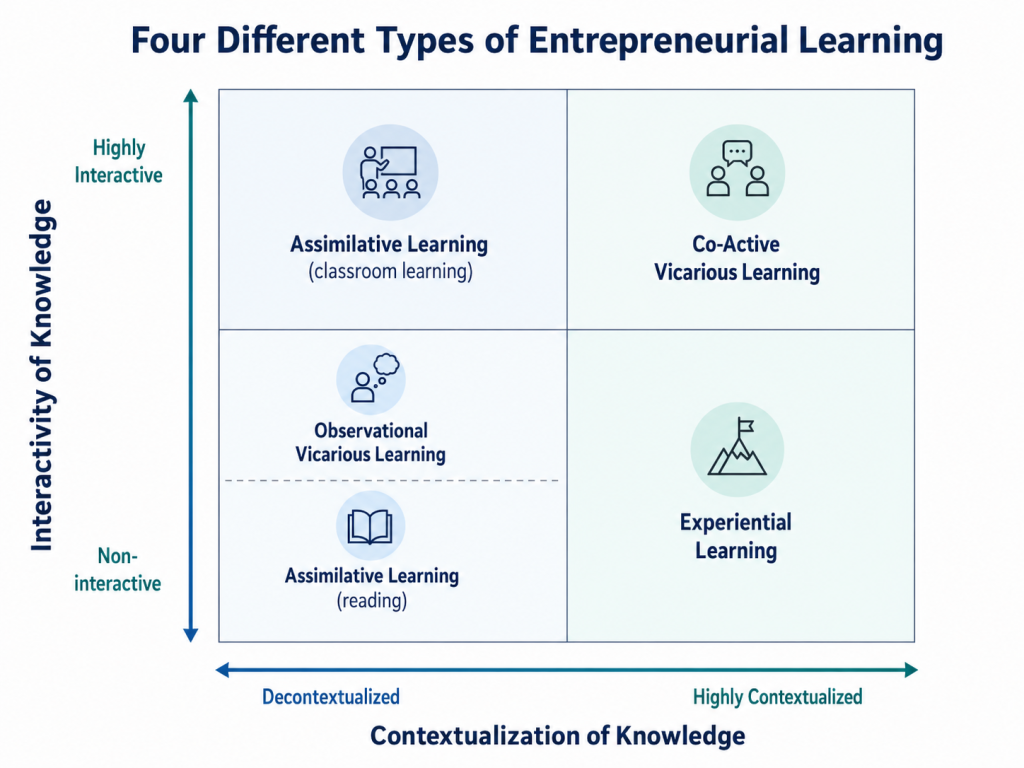
Figure 1: Four Different Types of Entrepreneurial Learning
CVL has three defining features that separate it from the other forms. First, it involves at least two people who are genuinely exchanging, not one lecturing the other. Second, it is driven by probing: participants ask and challenge, which shapes what surfaces. Third, it depends on storytelling from lived experience rather than abstract advice. Because of this, CVL produces exactly the deeply contextual knowledge that is immediately applicable to the problems facing founders.
When Archie needed to pivot his enterprise software company toward consumers, he talked it through with Rory, who in return was picking Archie's brains about enterprise sales. Because each knew the other's business, they could push on the specifics rather than trade generalities, testing which parts of Rory's consumer playbook would survive in Archie's very different sector. What they exchanged was not generic advice but stories of what had actually happened in their firms, which let Archie anticipate the problems ahead and have answers ready before they arrived.
This is why CVL matters more than the other forms for high-growth entrepreneurs. Scaling a company means confronting a relentless series of high-stakes problems: how to raise the next round, how to change your business model, when to fire an employee who isn't a good fit, or which investors will support you and which will burn you. Generic frameworks can't answer these questions, and your own past experience runs out fast when you're doing something for the first time. What works is talking to someone who has just walked the path a few steps ahead of you. CVL lets founders build heuristics: the simple rules of thumb that let them make fast, good-enough decisions under uncertainty. When entrepreneurs use CVL to build their heuristics, those rules of thumb are actually fitted to their situation rather than borrowed from a context that doesn't match.
The same ingredients, different results
When it came to the solitary forms of learning, the two cities looked nearly identical. Similar proportions of founders in each read books and attended trainings (assimilative learning) and observed distant companies (observational learning). The divergence appeared precisely where interaction was required. In Edinburgh, 96% of founders engaged in coactive vicarious learning. In Glasgow, only 50% did. Glaswegian founders, by contrast, leaned much more heavily on experiential learning by falling back on their own past experience because the interactive alternative wasn't there.
That gap is the whole story in miniature. These are two ecosystems with the same support programs, the same funding schemes, the same laws. But they produced radically different learning behaviors. And the difference wasn't explained by the founders' industries, their company sizes, or which support programs they'd been through. It tracked with the city itself, which means it tracked with the ecosystem's culture.
Culture is the foundation of learning
Why did Glasgow's founders learn so differently? Not because they were less capable or less ambitious. Instead, it was because the local culture normalized a different set of practices.
In Glasgow, founders repeatedly described low trust between entrepreneurs. Several believed that any help they offered wouldn't be reciprocated, or that advice from local peers carried little value. One founder recounted having an idea stolen and concluded you have to be careful who you engage with. But the more interesting finding is that this wasn't simply a "weak" or "bad" culture. Rather, Glasgow's norms pushed founders to focus their energy inward, on their own customers and their own operations, rather than on integrating into the founder community. "My focus has more been on our customers," one explained, "and I've felt it's of limited value networking here." Another was blunter: "I've got far too much to do… I don't do networking."
When founders did network, they did so selectively and defensively, preferring to talk only with companies in their exact sector because they assumed only those would be relevant. A MedTech founder said he saw little point talking to anyone outside medical devices. This narrowing had a cost: it starved founders of the wide-ranging, cross-sector conversations that might generate unexpected insights, and it left them poorly equipped when they hit problems their own experience hadn't prepared them for. One software founder admitted he had no idea how to move his customer base upmarket to larger companies, "because I've not seen how to do it properly before myself." With few peers to learn from, he was stuck.
Edinburgh's culture ran the opposite way. Founders described an environment of high interpersonal trust, captured in one interviewee's summary of the local ethos: "Don't be a dick. Just be a good person." That trust made it safe to admit weakness. A founder could say "I'm a CTO, but these are my limitations" without fear of being mocked or excluded, but instead be confident of an offer of advice. That safety is the precondition for CVL, because you can't jointly work through a problem you're afraid to reveal.
Crucially, Edinburgh's culture didn't just change attitudes; it shaped the structure of the ecosystem itself. Because founders valued interaction, they showed up to events in large numbers and they built their own. One interviewee ran an invitation-only monthly dinner for founders who had raised serious funding, meaning they all shared the same class of problems. Three other Edinburgh interviewees reported organizing their own events. This is the key mechanism: a culture that prizes networking produces more venues for networking, which produces more opportunities for CVL, which produces better-informed founders. Edinburgh's founders also reported learning readily across sectors. Edinburgh has dozens of the exact type of teachers the founder of a growing firm needs: people who have been through it before and who have the ability to really think about how their advice might apply to others.
The mechanism, laid out step by step, runs like this. An ecosystem's culture normalizes certain practices like networking and openness in Edinburgh or internal focus and caution in Glasgow. Those normalized practices shape the ecosystem's structure, because a culture that values interaction produces the events, groups, and dense networks where interaction can occur. That structure then affects which forms of learning are available and easy. The available learning shapes the heuristics founders develop. And the heuristics feed growth outcomes, which are observed and copied by the next wave of founders, looping back to reinforce (or slowly change) the original culture. Culture isn't a vague background mood; it's the first link in a concrete causal chain that ends in company growth.
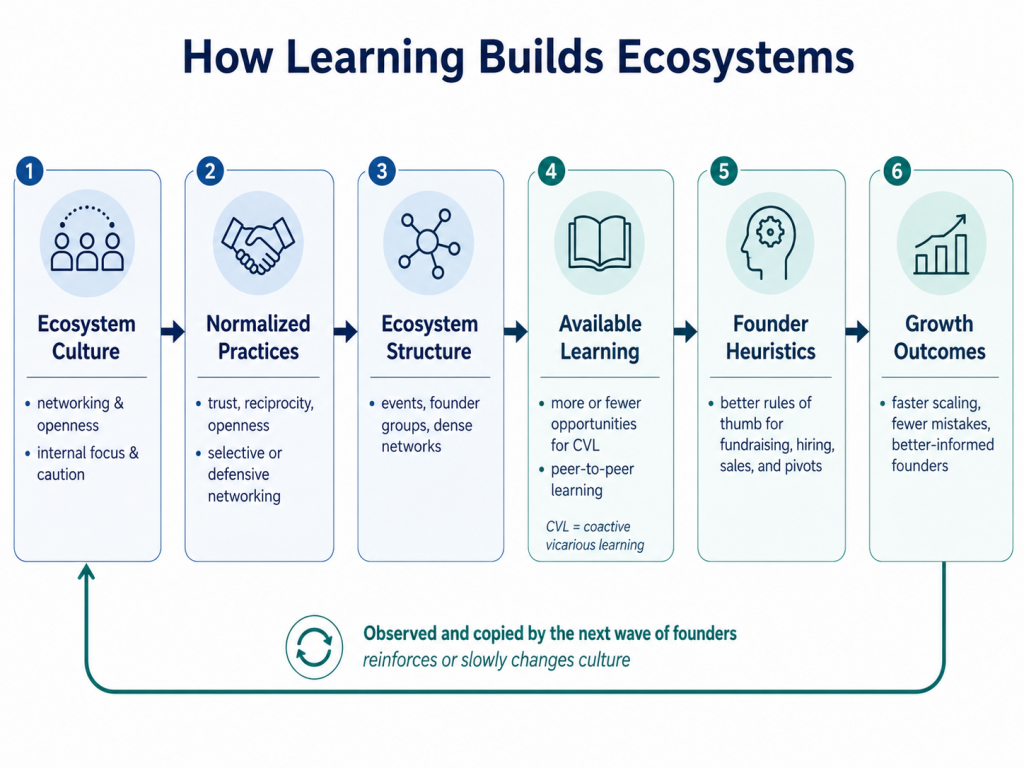
Figure 2: How Learning Builds Ecosystems
The payoff showed up in the substance of what founders learned. Edinburgh founders used their trusted networks to develop situation-specific heuristics. One, reviewing term sheets for the first time, described picking up the phone to peers who'd raised from the same investors: "They've put this term in my investment box. Is that a worrying thing? Did you have that?" That's CVL in action and it's the kind of forewarning that helps a founder avoid an unscrupulous investor or a value-destroying clause. Cohort-based programs like accelerators deepened this further, creating tight groups of founders one step behind each other who could preview the challenges coming a few weeks or months down the road.
From learning to growth
Does any of this actually connect to company performance? The data can only show correlation, not causation, and it's worth being clear-eyed about that. But the pattern is striking. Founders who engaged in coactive vicarious learning had companies that were larger and grew faster. Those who didn't engage in CVL grew their headcount by about 12% over the study period; those who did grew it by 123%. On investment raised, the CVL group pulled dramatically ahead. And because CVL was concentrated in Edinburgh, the city-level numbers followed suit: Edinburgh firms increased their outside capital by 231% over the period studied, against 72% in Glasgow, and Edinburgh overtook Glasgow on average employee count despite starting lower.
There are other plausible explanations for part of this: Edinburgh founders may have enjoyed better investor access unrelated to learning, and more skilled founders might both network more and grow faster. But the consistency of the association, combined with the rich interview evidence of how CVL helped founders solve concrete growth problems, points to a real connection between the way entrepreneurs learn from their ecosystem and how well their companies do.
None of this is deterministic. There were Edinburgh founders who deliberately opted out. For example, I spoke with an aerospace founder who felt too different from the software crowd and stuck to books and sector-specific training. And there were Glasgow founders who hungered for CVL but were frustrated by their peers' disengagement. Culture doesn't force a learning style. It makes some styles easier and more effective than others, tilting the whole system in one direction.
What ecosystem builders should do differently
If a strong ecosystem is a learning machine, then the job of building one looks different than the conventional playbook suggests. The instinct is to fill perceived gaps: not enough funding? Better create a co-investment fund. Not enough training? Launch a new program! Those things can help. But the most important role of an ecosystem leader is to build a community of entrepreneurs who learn from one another. This is a very different task than providing resources.
Prioritize connection over content.
The value of an accelerator or a cohort program lies less in its curriculum than in the trusted relationships it forges between founders. Those relationships endure long after the program ends and keep generating CVL for years. When designing programs, ask whether they're building durable peer connections, not just delivering material.
Start small where the culture is cold.
In places like Glasgow, where norms discourage interactive learning, you can't mandate a culture change. But you can cultivate CVL among a small group of founders first. Start with a tight cohort with a shared stage and shared problems and let their success model the behavior for others. Culture shifts through demonstration, not decree.
Recognize that trust is infrastructure.
Trust between founders is as much a piece of ecosystem infrastructure as an incubator building or a seed fund. Efforts that build reciprocity and openness, and that celebrate founders who give back, are doing structural work even when they don't look like it.
Finally, reframe what a "resource" is.
The scarcest resource in a weak ecosystem often isn't capital. It's access to peers who have solved the problem you're facing and are willing to talk it through with you. Ecosystem leaders should treat the creation of those learning encounters as a central objective, not a happy byproduct.
The deeper shift here is conceptual. We tend to picture entrepreneurial knowledge as something that flows down from universities, consultants, and training organizations to founders. The Edinburgh/Glasgow comparison suggests the more powerful flow is horizontal, from founder to founder. The best ecosystems function as what researchers call communities of practice: places whose networks and norms let practitioners learn collectively through shared stories and mutual problem-solving.
Explore the research
Learning to grow in entrepreneurial ecosystems. Small Business Economics, July 1, 2026.

View Profile